



Risks of Unapproved AI Tools
Artificial Intelligence (AI) has quickly become a part of everyday work. From content creation and coding assistance to data analysis and workflow automation, AI tools are helping employees complete tasks faster than ever before. Platforms like ChatGPT, Claude, Gemini, and AI-powered coding assistants have transformed productivity across industries.
However, alongside this rapid adoption comes a growing concern for security teams: Shadow AI.
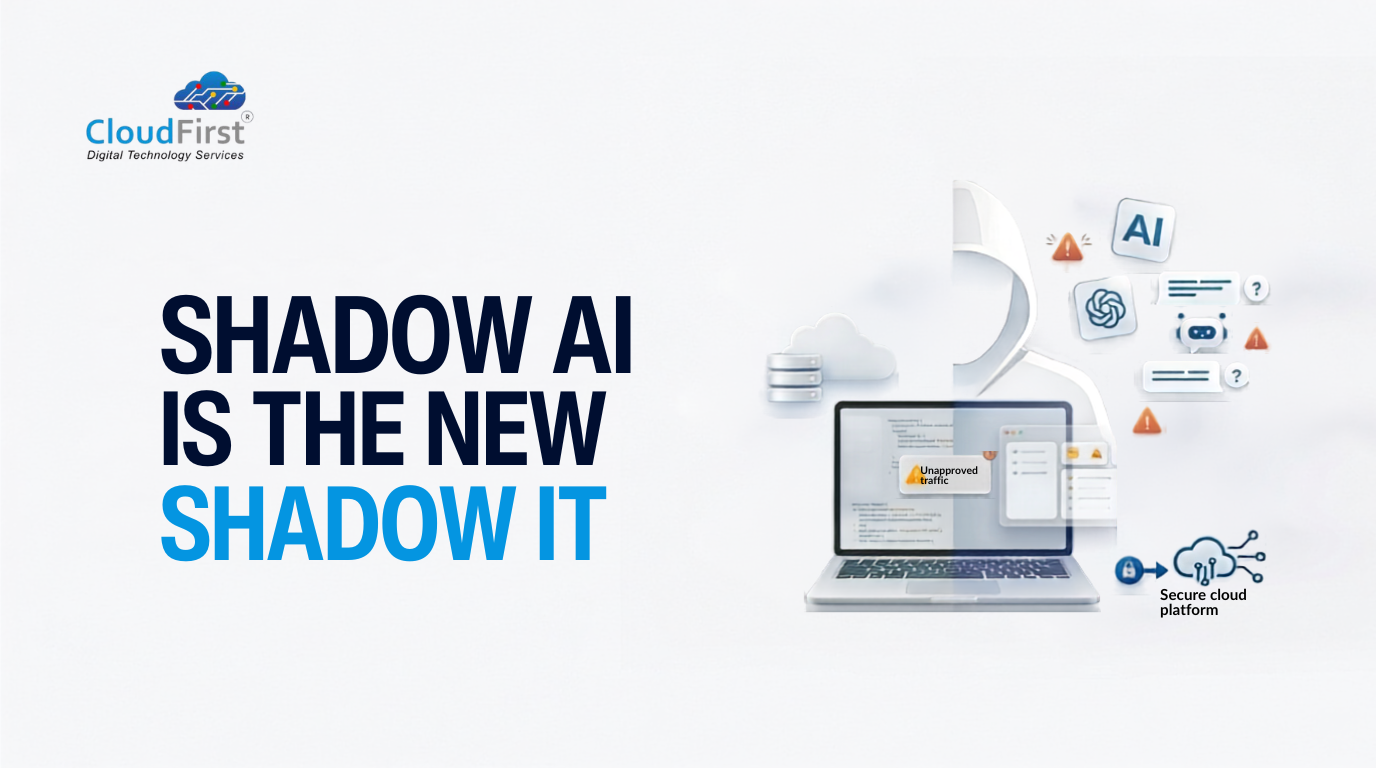
Much like the rise of Shadow IT a decade ago, employees are increasingly using AI tools without the knowledge, approval, or oversight of their organization's IT and security departments. While these tools can boost efficiency, they also introduce significant risks related to data security, governance, compliance, and intellectual property protection.
As businesses accelerate their AI initiatives, understanding and managing Shadow AI is becoming a critical priority.
What Is Shadow AI?
Shadow AI refers to the use of artificial intelligence applications, platforms, or services within an organization without formal approval from IT or security teams.
Examples include employees using:
- ChatGPT for drafting business documents
- Claude for summarizing confidential reports
- Gemini for research and analysis
- AI coding assistants for software development
- AI automation platforms for workflow management
In many cases, employees adopt these tools with good intentions. They want to work faster, improve productivity, and gain a competitive advantage. The challenge is that these tools often operate outside established security and governance frameworks.
As a result, organizations may have little visibility into what sensitive data is being shared, how it is being processed, or where it is being stored.
Why Shadow AI Is Growing So Quickly
The rapid growth of Shadow AI is driven by accessibility.
Unlike traditional enterprise software, many AI tools are available instantly through a web browser. Employees can begin using them within minutes, often without requiring software installation or administrative approval.
Increased Productivity
Artificial intelligence can automate repetitive tasks, generate content, write code, and analyze large volumes of information, making it highly attractive to employees.
Ease of Access
Most AI platforms offer free or low-cost versions that are readily available to anyone with an internet connection.
Pressure to Innovate
Organizations are encouraging digital transformation and innovation, leading employees to experiment with new technologies independently.
Lack of Formal AI Governance
Many businesses are still developing AI governance frameworks, leaving uncertainty around acceptable usage.
The result is a growing gap between AI adoption and organizational oversight.
The Security Risks Associated with Shadow AI
While Shadow AI can improve productivity, it can also expose organizations to serious AI security challenges.
Sensitive Data Exposure
One of the biggest concerns is employees unintentionally sharing sensitive data with external AI platforms.
Examples include:
- Customer records
- Financial data
- Internal business strategies
- Source code
- Legal documents
- Intellectual property
Once confidential information is entered into an external AI tool, organizations may lose visibility into how that data is stored, processed, or retained.
Compliance Risks and Regulatory Challenges
Many industries operate under strict regulations governing data security and privacy.
Unauthorized use of AI tools may create compliance risks related to:
- Data protection regulations
- Industry-specific security standards
- Customer privacy requirements
- Data residency obligations
Without proper oversight, organizations may unknowingly violate regulatory requirements.
Intellectual Property Risks
Employees often use AI tools to assist with product development, content creation, and software engineering.
Sharing proprietary information with external AI systems can potentially expose valuable intellectual property and trade secrets.
How Organizations Are Responding
Recognizing the growing risks, enterprises are beginning to implement dedicated Shadow AI governance strategies.
AI Usage Discovery
Security teams are deploying tools that identify which AI platforms employees are accessing across the organization.
Data Protection Controls
Modern security solutions can monitor interactions between users and AI tools to identify attempts to share sensitive data.
AI Governance Frameworks
Organizations are creating formal AI governance policies that define:
- Approved AI platforms
- Acceptable use cases
- Data handling requirements
- Employee responsibilities
- Security and compliance expectations
Employee Education
Technology alone cannot solve the Shadow AI challenge.
Training programs help employees understand:
- What information should never be shared with AI tools
- Approved platforms and workflows
- AI security best practices
- Regulatory obligations
Conclusion
As organizations continue to embrace AI-driven innovation, the challenge is no longer just adopting new technologies—it is ensuring they are deployed securely, responsibly, and within a governed framework. Shadow AI highlights the risks that emerge when employees gain access to powerful tools without adequate visibility, controls, or oversight.
A CloudFirst approach provides a strong foundation for managing these challenges. By leveraging secure cloud environments, centralized governance, and modern data protection capabilities, organizations can enable AI adoption while maintaining control over sensitive information, compliance requirements, and operational risk.
The future of AI success lies in balancing innovation with security. Organizations that combine robust AI governance with a CloudFirst strategy will be better equipped to scale AI initiatives, protect critical business assets, and unlock the full potential of intelligent technologies with confidence.