




For many organizations, moving to the cloud has unlocked unprecedented scalability, flexibility, and innovation. Yet as cloud adoption grows, so does a new challenge—managing cloud costs effectively.
It's not uncommon for businesses to discover that their monthly cloud bill is significantly higher than expected. Idle virtual machines, over-provisioned resources, duplicate storage, forgotten test environments, and unpredictable workloads can quietly drain IT budgets.
This is where Cloud FinOps comes in.
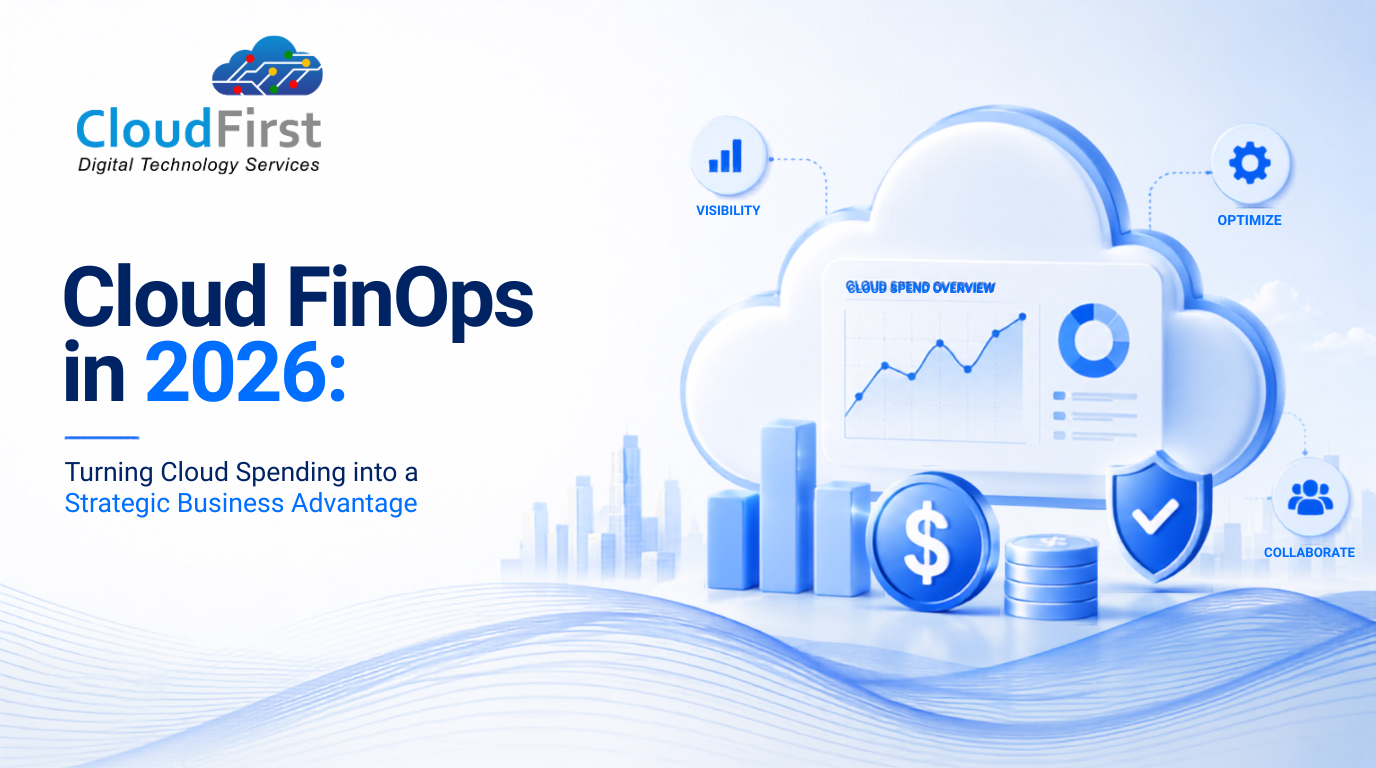
More than just cost optimization, FinOps is a collaborative operational practice that helps finance, engineering, and business teams work together to maximize the value of every dollar spent in the cloud. In 2026, FinOps has become a critical strategy for organizations looking to balance innovation with financial accountability.
What Is Cloud FinOps?
Cloud FinOps, short for Cloud Financial Operations, is a framework that enables organizations to monitor, optimize, and govern cloud spending in real time.
Unlike traditional IT budgeting, where infrastructure costs were relatively fixed, cloud computing follows a consumption-based pricing model. Businesses only pay for what they use—but without proper visibility, they often end up paying for much more than necessary.
FinOps introduces continuous cost management by combining technology, data, and cross-functional collaboration to ensure cloud investments align with business objectives.
Why Cloud Costs Continue to Rise
Many organizations assume that migrating to the cloud automatically reduces costs. While the cloud can be highly cost-effective, inefficient resource management often leads to unnecessary expenses.
Common causes of cloud overspending include:
- Unused virtual machines running continuously
- Oversized compute instances
- Duplicate storage volumes
- Forgotten development and testing environments
- Inefficient application architecture
- Lack of cost visibility across departments
- Poor workload scheduling
Without regular monitoring, these inefficiencies accumulate over time and impact overall profitability.
The Three Pillars of FinOps
Successful FinOps strategies are built around three continuous phases.
1. Inform
Organizations need complete visibility into where cloud spending occurs.
This involves:
- Resource tagging
- Department-wise cost allocation
- Usage dashboards
- Budget forecasting
- Cost reporting
Clear financial visibility enables teams to make informed decisions rather than reacting to unexpected invoices.
2. Optimize
Once spending patterns are understood, businesses can begin optimizing workloads.
Optimization may include:
- Rightsizing virtual machines
- Eliminating unused resources
- Automating shutdown schedules
- Selecting appropriate storage tiers
- Using reserved or savings plans
- Improving workload efficiency
Even small optimizations can generate substantial long-term savings.
3. Operate
FinOps is not a one-time project.
Organizations establish governance policies, automate monitoring, review cloud spending regularly, and continuously improve infrastructure efficiency as workloads evolve.
This ongoing operational discipline ensures sustainable cloud growth.
How FinOps Supports Business Growth
FinOps is often associated with cost reduction, but its real value extends far beyond saving money.
A mature FinOps practice helps organizations:
- Improve financial forecasting
- Increase operational efficiency
- Accelerate cloud adoption
- Enable faster innovation
- Reduce waste
- Improve accountability
- Strengthen collaboration between technical and financial teams
Instead of limiting innovation, FinOps empowers businesses to invest confidently in technologies that deliver measurable value.
AI Is Making FinOps Even More Important
Artificial Intelligence workloads consume significant computing resources, making cost management more complex than ever.
Training machine learning models, processing large datasets, and running generative AI applications require scalable infrastructure that can quickly increase operational expenses.
Organizations adopting AI without a FinOps strategy often experience:
- Unexpected cloud bills
- Resource overprovisioning
- Underutilized GPU instances
- Poor workload scheduling
- Inefficient storage management
Integrating FinOps with AI initiatives ensures innovation remains financially sustainable.
Best Practices for Successful FinOps
Organizations beginning their FinOps journey should consider the following practices:
Establish Cloud Cost Ownership
Every team should understand how its infrastructure decisions affect cloud spending.
Assigning ownership encourages responsible resource utilization.
Implement Resource Tagging
Consistent tagging makes it easier to track costs by department, application, project, or customer.
Accurate data improves reporting and budgeting.
Monitor Continuously
Cloud environments change constantly.
Real-time monitoring helps organizations identify unusual spending patterns before they become expensive problems.
Automate Cost Controls
Automation can:
- Shut down unused development environments
- Scale resources based on demand
- Remove idle workloads
- Trigger budget alerts
Automation reduces manual effort while improving operational efficiency.
Review Infrastructure Regularly
Business requirements evolve over time.
Regular infrastructure reviews ensure cloud resources continue supporting current workloads without unnecessary costs.
The Future of Cloud Financial Management
Cloud financial management is becoming increasingly intelligent.
AI-powered analytics now help organizations:
- Predict future spending
- Identify optimization opportunities
- Detect unusual consumption patterns
- Recommend infrastructure improvements
- Automate resource allocation
As cloud environments become more complex, intelligent financial management will become an essential component of enterprise cloud strategy.
Organizations that embrace FinOps today will gain greater visibility, improved efficiency, and stronger control over future cloud investments.
Final Thoughts
Cloud computing offers tremendous opportunities for innovation—but without financial discipline, those opportunities can quickly become costly.
Cloud FinOps enables organizations to maximize the value of their cloud investments by combining financial accountability with operational excellence.
Rather than simply reducing expenses, FinOps helps businesses build a cloud strategy that supports innovation, scalability, and long-term growth.
As cloud adoption continues to accelerate, FinOps will no longer be optional—it will be a core business capability.
How CloudFirst Helps Optimize Cloud Investments
Managing cloud infrastructure effectively requires more than just deploying workloads—it requires continuous optimization, governance, and expert guidance. CloudFirst helps organizations maximize the value of their cloud investments through cloud migration, managed cloud services, infrastructure optimization, hybrid and multi-cloud solutions, cloud security, disaster recovery, performance monitoring, and ongoing cloud management. By helping businesses improve efficiency, control costs, and strengthen operational resilience, CloudFirst enables organizations to build cloud environments that are both high-performing and financially sustainable.